Regional breakdown
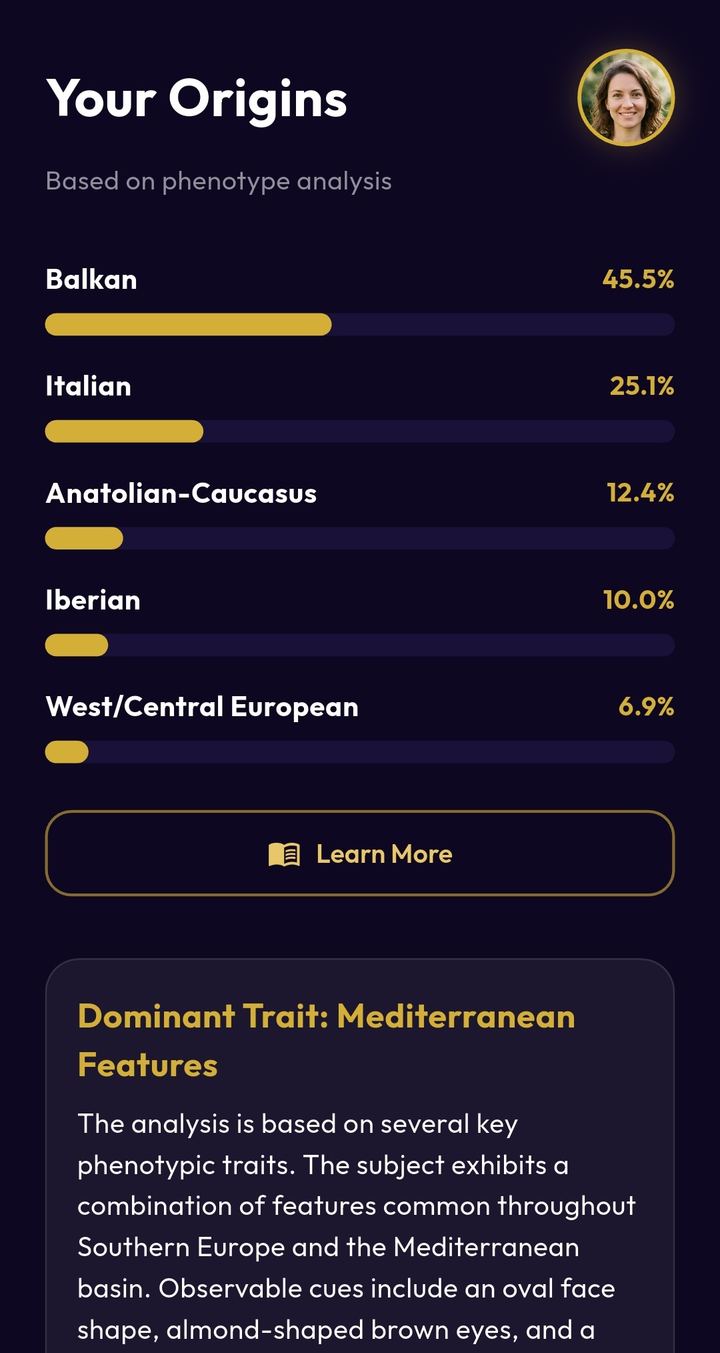
Your estimate spread across the regions it draws from, weighted by confidence, using a globally balanced prior rather than a European default.
AI phenotype analysis
Origins reads the visible features in your photo, estimates which ancestral regions they are most common in, and maps the migrations that could have carried them there.
An AI estimate from visible features. Not a DNA test.
The sequence
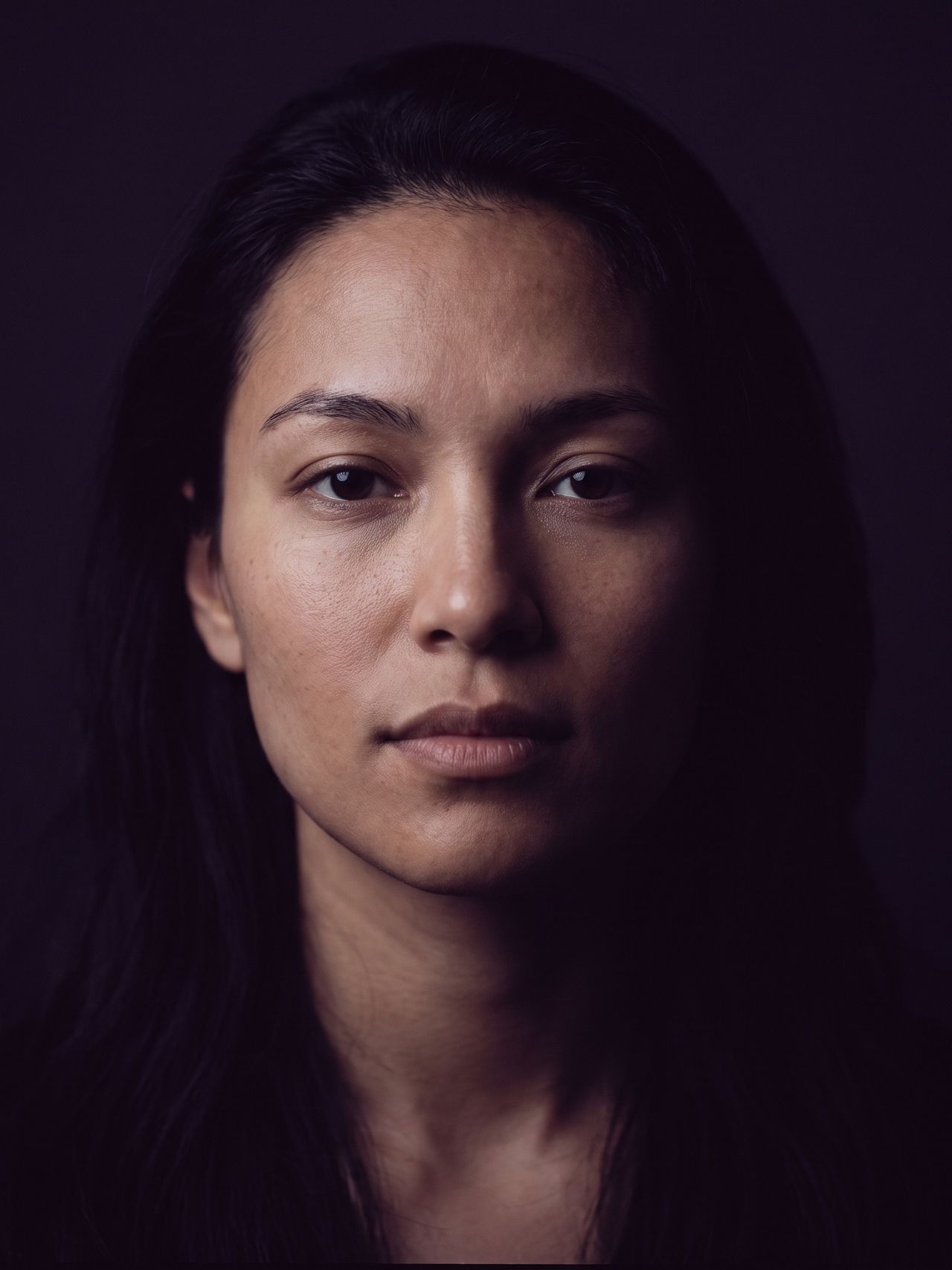
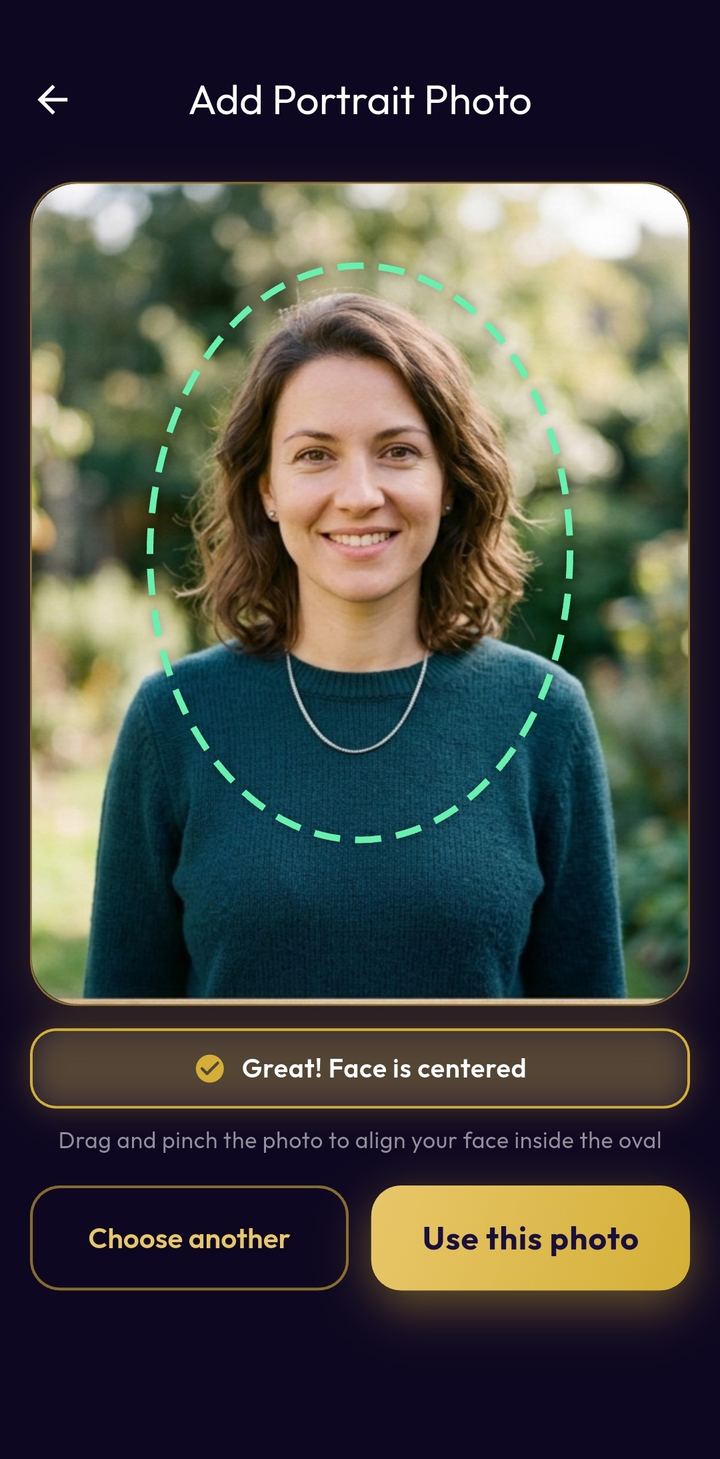
An on-device detector guides your face into the oval and captures when you are aligned. It checks that you are facing the camera and close enough — no ID photo required.
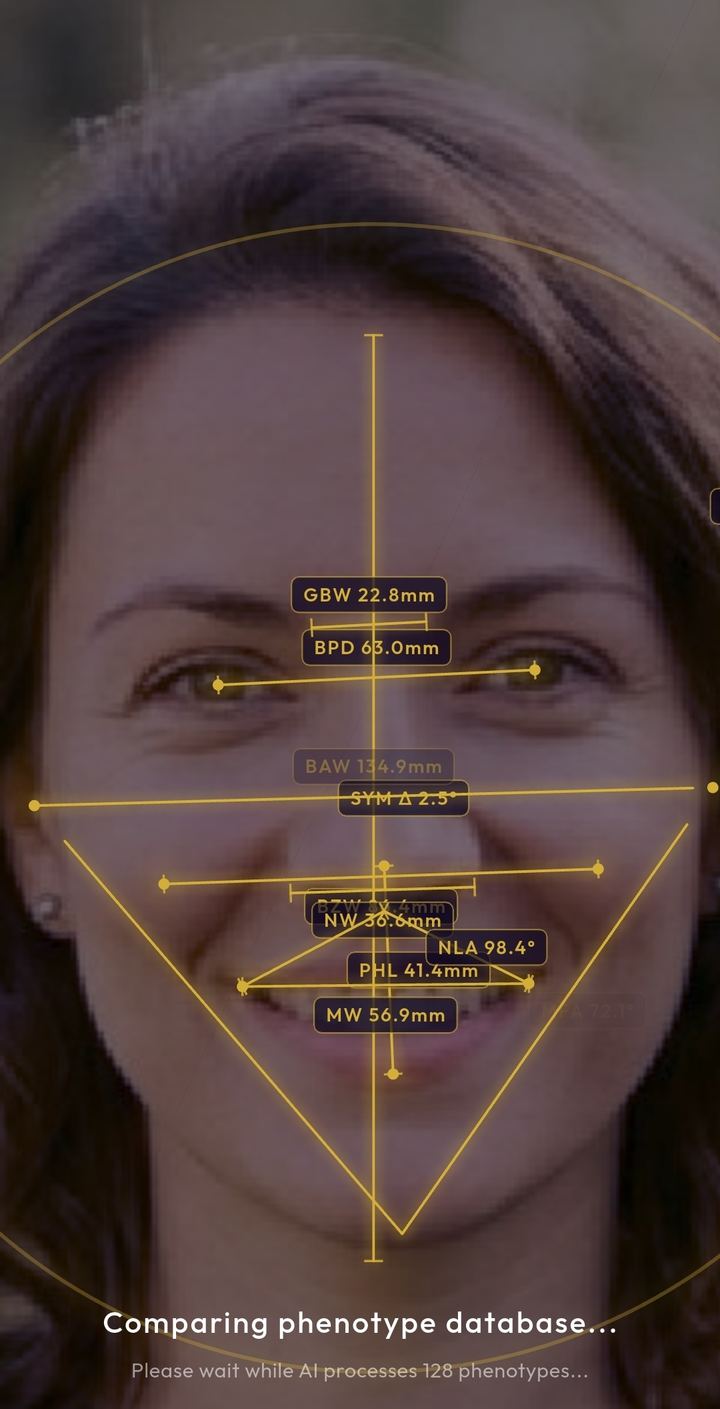
An AI model reads visible features such as face shape, nose, eyes and skin tone, and compares them against 49 canonical ancestral regions, from the British Isles to the Andean Highlands.
You get a percentage breakdown, a dominant trait, and — this is the part most tools skip — a written explanation naming the specific cues behind each estimate.
What you get
Your estimate spread across the regions it draws from, weighted by confidence, using a globally balanced prior rather than a European default.
At least three observable cues — face shape, nasal profile, eye region, skin undertone — each linked to the regions they point toward.
The single feature pattern the model weighted most heavily, named in plain language.
Three to ten historical events connecting your estimated regions, in chronological order, each placed at real coordinates.
Your breakdown rendered as a single image, disclaimer included, ready to send in one tap.
Past analyses stay in the app for you to revisit, and clear whenever you want.
Two modes
One front-facing portrait. The full report — breakdown, reasoning, dominant trait, migration map.
A front portrait plus a true side profile, so the model can read the nasal bridge, brow and jaw in profile. Hand and foot photos are optional and feed into the same estimate.
Both are one-time purchases. Deep Analysis is a separate, more thorough read — not a subscription tier.
Privacy
The short version, in the order it happens. The full policy is available in every language Origins supports.
Google ML Kit finds your face in the camera frame to guide framing, and draws a personalised loading animation over your photo while the analysis runs. Both happen on your device: nothing is stored or transmitted, and no biometric template is created.
Your photo is sent over HTTPS to our backend and on to Google Gemini for the analysis you asked for. Raw photos are not kept on our servers and are never used to train models.
The result is deleted from our server as soon as it reaches your device, and within 24 hours at the latest if it cannot be delivered. A limited record without the result is kept for up to 30 days to prevent abuse, then removed automatically.
Your results and photos are saved locally on your device so you can revisit them, and Clear History deletes them for good.
Paying for it
Origins has no subscription. You pay per analysis, through the App Store or Google Play, at the price your store shows. Each purchase is one analysis on the device you bought it on.
Why it isn't free: every analysis calls a paid AI model. The payment covers that call and the servers around it.
Download
Scan the code, or open your store directly.
Scan to download Origins
Questions